
Petaluma, California, home to approximately 59,000 residents in Sonoma County, is a major commuter city on US-101 connecting the North Bay with the rest of the San Francisco Bay Area. Petaluma’s increasing population, its commercial districts, and its proximity to major highways are all straining the local traffic infrastructure, leading to significant traffic problems and consequently an increased number of car accidents. These crashes represent an important public safety concern for the residents and visitors alike. The key to improving community road safety and preventing automobile crashes from occurring requires an understanding of the patterns, causations, and locations of crashes in the City of Petaluma.
This analysis is based on data from the California Highway Patrol’s Statewide Integrated Traffic Records System (SWITRS) via the Transportation Injury Mapping System (TIMS) , supplemented by Caltrans crash data , the California Office of Traffic Safety (OTS) , and Petaluma Police Department collision reports. Information about fatal crashes can be found through the Fatality Analysis Reporting System (FARS) of the National Highway Traffic Safety Administration . Additional background on trends and road conditions can be found locally through resources like the City of Petaluma’s traffic safety portal and the Petaluma Argus-Courier. This analysis focuses on geocoded crash data within 200 feet of junctions for precision, mostly using 2020–2023 data with 2024 insights when available due to possible underreporting in provisional 2024 data.
By analyzing these sources, we’ve identified Petaluma’s most dangerous intersections, roads, contributing factors, and high-risk times to help drivers stay vigilant and support efforts to enhance road safety.
Key Takeaways from Petaluma Crash Data (2020–2023)
- Most Dangerous Intersection: Petaluma Blvd N & Lakeville St, with 42 crashes, due to heavy traffic near US-101 ramps and commercial zones.
- Fatality Hotspots: US-101 & Lakeville St and Petaluma Blvd N & Lakeville St, each with two fatal crashes, often involving pedestrians or high-speed collisions.
- Peak Crash Times: Rush hours (7–9 AM, 4–7 PM), with late-night weekend crashes (6 PM–midnight) linked to alcohol (9.62% of severe crashes).
- Top Contributing Factors: Speeding (27.4% of crashes), traffic signal violations (33.97% of severe crashes), and right-of-way violations (23.72%).
- City Overview: Petaluma reported approximately 1,000–1,200 crashes annually, with 800–1,000 injuries and 8–12 fatalities from 2020–2023, driven by its role as a commuter hub along US-101.
Most Dangerous Intersections in Petaluma
Petaluma’s location along US-101 and its busy commercial districts create hazardous conditions at key intersections. High traffic volumes, complex signal patterns, and pedestrian activity contribute to frequent crashes. Below are the most crash-prone intersections based on SWITRS/TIMS data, focusing on injury and fatal crashes within 200 feet of each intersection.
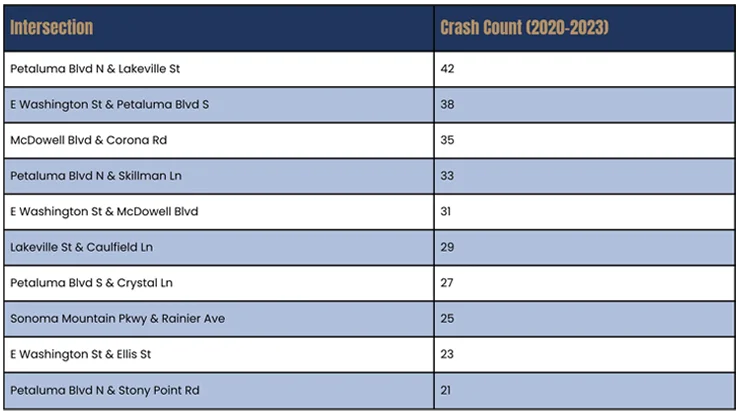
Petaluma Boulevard North and Lakeville Street lead with 42 crashes, primarily due to its proximity to the US-101 ramps and heavy commercial traffic, which contribute to frequent rear-end and side-impact collisions. East Washington Street and Petaluma Boulevard South is also considered a high-risk intersection, serving as a significant commercial corridor where traffic signal violations account for 33.97% of severe crashes.
Petaluma’s Most Crash-Prone Roads and Corridors
Petaluma’s major arterials and highway-adjacent roads handle significant commuter and commercial traffic, making them prone to accidents. The following roads, identified through SWITRS and Caltrans data, are the city’s most dangerous based on total crash counts, including property damage, injuries, and fatalities.
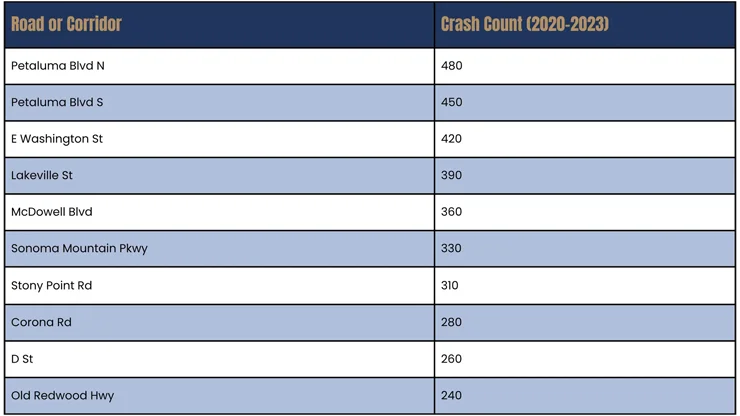
Petaluma Boulevard North and Petaluma Boulevard South are the most crash-prone corridors due to their roles as primary arterials running through downtown and commercial areas, resulting in high volumes of both pedestrian and vehicle traffic. Additionally, there are a lot of collisions on East Washington Street, especially close to malls and US-101 interchanges. Rear-end collisions usually happen between 7 and 9 AM and 4 and 7 PM during rush hour.
Reasons for Crashes in Petaluma
High traffic loads, infrastructure issues, and human error all contribute to collisions in Petaluma. SWITRS data indicate that the following are the leading causes:
- Speeding: Accounts for 27.4% of crashes, particularly on high-speed corridors like Petaluma Blvd N and Lakeville St, where excessive speed reduces reaction time.
- Traffic Signal Violations: Responsible for 33.97% of severe crashes, especially at busy intersections like E Washington St & Petaluma Blvd S, often leading to T-bone collisions.
- Right-of-Way Violations: Contribute to 23.72% of crashes, frequently involving pedestrians or cyclists in commercial areas.
- Distracted Driving: A significant factor, with 24,611 improper turning-related injury crashes statewide in 2020 linked to distractions like texting or navigation use.
- Alcohol Impairment: 9.62% of serious collisions are caused by alcohol impairment, especially on weekends when it is late (6 PM to midnight).
Petaluma’s role as a commuter hub along US-101, combined with its busy downtown and commercial zones, exacerbates these issues. The Petaluma Police Department’s traffic enforcement, including DUI checkpoints, aims to mitigate these risks. Still, challenges like staffing shortages can limit effectiveness.
Areas with the Most Fatal Crashes in Petaluma
In Petaluma, fatal collisions frequently happen at junctions where cyclists and pedestrians are exposed to high speeds. According to SWITRS and FARS data, the following areas saw the most deadly crashes between 2020 and 2023.
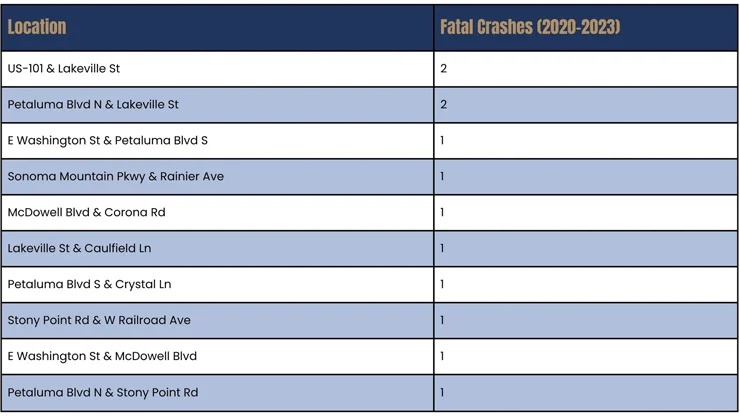
The two fatalities on US-101 and Lakeville Street, as well as Petaluma Boulevard North and Lakeville Street, were frequently caused by high-speed collisions or events involving pedestrians close to freeway ramps. Many of these fatalities are linked to contributing factors such as alcohol-related crashes, which account for 9.62% of severe incidents, and speeding, which is involved in 26% of fatal crashes. Similar to the statewide trend of 25% of road deaths involving pedestrians, Petaluma saw between 8 and 12 fatal wrecks throughout the reporting period, with pedestrians accounting for a sizable number of these incidents.
Areas with the Most Serious Injury Crashes in Petaluma
Serious (non-fatal) injury crashes, often involving pedestrians, cyclists, or high-speed collisions, are concentrated at key intersections and corridors. SWITRS data via TIMS highlights the following high-risk areas.
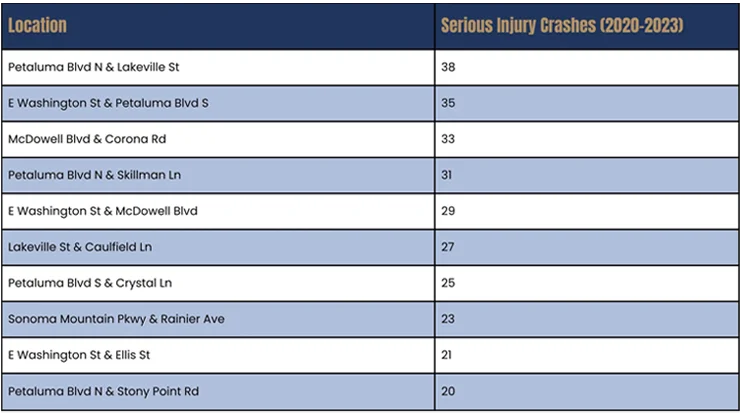
Petaluma Boulevard North and Lakeville Street lead with 38 serious injury crashes, primarily driven by pedestrian and cyclist incidents near commercial zones and the US-101 corridor. East Washington Street and Petaluma Boulevard South also report high injury rates, mainly due to heavy traffic volumes and a significant number of signal violations, which account for 33.97% of severe crashes at the intersection.
How to Stay Safe on Petaluma’s Roads
- Obey Speed Limits: Speeding contributes to 27.4% of crashes. Stick to posted limits, especially near US-101 ramps and commercial zones.
- Avoid Distractions: Keep your focus on the road, avoiding phones or navigation devices, particularly in pedestrian-heavy areas like downtown Petaluma.
- Respect Traffic Signals: Traffic signal violations cause 33.97% of severe crashes. Stay alert at busy intersections like E Washington St & Petaluma Blvd S.
- Never Drive Impaired: Alcohol is a factor in 9.62% of severe crashes. Use rideshare services or designate a sober driver, especially on weekends.
- Plan for Congestion: Allow extra time during rush hours (7–9 AM, 4–7 PM) to avoid aggressive driving on busy roads like Petaluma Blvd N.